 GMB Radar
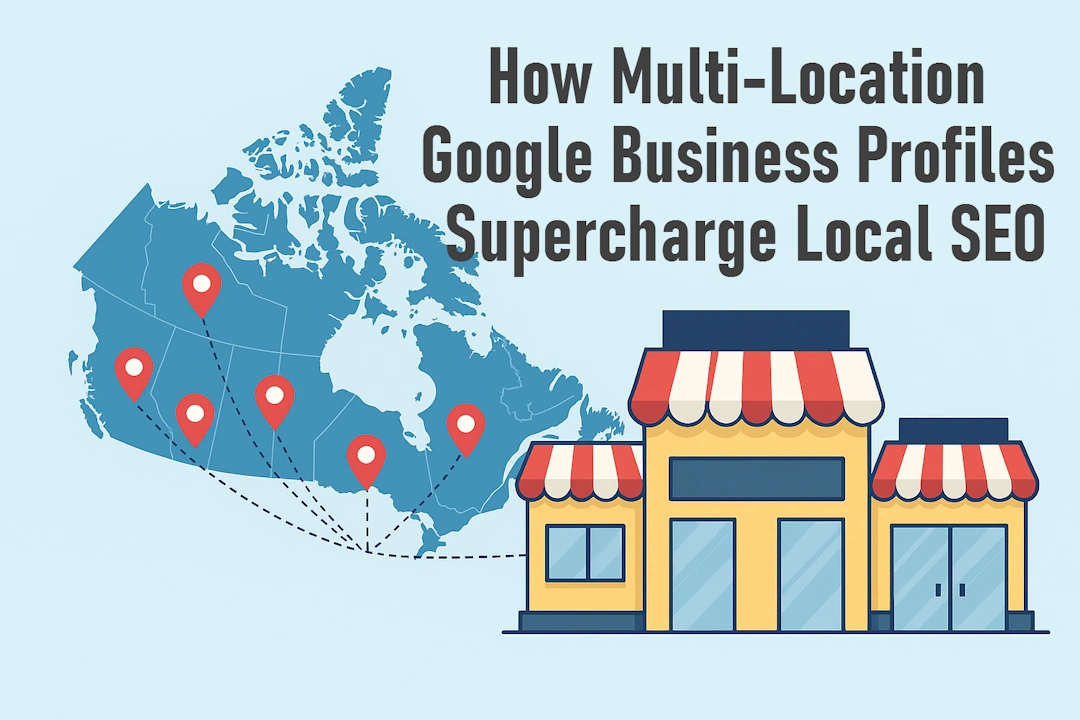
Many growing businesses operate in more than one city or region. When managed well, multiple Google Business Profiles can become one of the strongest local SEO assets a brand has.
The Advantages of Multi-Location Google Business Profiles
1. Strong Local Visibility Across Multiple Cities
Each Google Business Profile (GBP) gives your brand the opportunity to appear in the local map pack for city-level searches such as “electrician near me” or “marketing agency in Toronto.” Instead of relying on a single head office listing, a multi-location setup lets you capture demand in every city where you operate.
This is especially powerful when you combine your profiles with specialized local SEO tools that monitor visibility and performance for each location.
2. More High-Intent Leads from Every Location
Local searches often come from people who are ready to take action. Each optimized GBP can generate:
- Phone calls from nearby prospects
- Click-throughs to your website or booking pages
- Direction requests to your physical location
With multiple locations, your business effectively builds a network of local lead generators. When combined with a dedicated local rank tracker, you can see which locations drive the most visibility and optimize accordingly.
3. Stronger Geographic Authority
Businesses that show up in multiple cities and regions build stronger geographic relevance in the eyes of search engines. Over time, this boosts your visibility for:
- City-based service keywords
- Province-wide or regional searches
- “Near me” and “open now” queries across your footprint
This geographic authority supports both your local listings and your website rankings. It fits neatly with broader local SEO strategy and helps position your brand as a market leader in each region.
4. National Brand Presence and Trust
When customers see your brand consistently represented in multiple cities, it creates an impression of scale, reliability, and professionalism. For service businesses, that perceived trust can be just as important as price or proximity.
A well-managed set of GBPs, supported by strong reviews and accurate information, helps you stand out in local search results, especially in competitive markets. You can explore more general benefits of Google listings in this guide on the top benefits of Google Business Profiles.
5. Faster Social Proof and Review Growth
Each location has the ability to collect its own reviews, giving you the chance to build localized social proof that resonates with nearby customers. As reviews accumulate across all your locations, your overall reputation strengthens.
More reviews and higher average ratings typically lead to better engagement, higher click-through rates, and stronger map visibility. For more ideas on how to encourage reviews, you can reference this article on getting more customer reviews.
6. Synergy Between Google Maps and Website SEO
When your GBPs send consistent, targeted traffic to well-optimized landing pages, you create a positive feedback loop:
- More branded and local searches for your business
- Higher engagement on key pages
- Better understanding of your services and locations by search engines
This synergy is a big reason why it’s smart to track website and local rankings together instead of treating them as separate channels.
How to Manage Multiple Google Business Profiles Effectively
1. Treat Each Location as Its Own Local Asset
Even if locations share the same brand, each one should have:
- Accurate name, address, and phone number
- Location-specific business hours
- Localized descriptions and services
- Photos that reflect the actual space or service area
This approach improves both user experience and local relevance for each profile.
2. Pair Every Profile with a Strong Location Landing Page
Ideally, each profile should link to a dedicated location page on your site, such as:
example.com/locations/toronto
example.com/locations/vancouver
example.com/locations/montreal
These pages should include:
- Local content tailored to that city
- Details of services offered at that location
- Embedded Google Map and contact details
- Local testimonials or case studies, if available
3. Centralize Management of Updates and Content
As the number of locations grows, managing them manually becomes time-consuming. Centralized dashboards and local SEO tools allow you to:
- Monitor profile changes and status across all locations
- Keep business information consistent
- Roll out updates efficiently
This kind of centralized control is vital for agencies and multi-location brands that want to scale without losing quality.
4. Use Posts, Q&A, and Photos Proactively
Google gives you multiple ways to keep each profile fresh:
- Posts for promotions, events, and updates
- Photos that showcase your team, premises, or service work
- Q&A to address common customer questions
Regular activity on your profiles signals that the business is active and engaged, which can contribute to stronger performance in local search.
Aligning Local SEO with Website SEO
1. Keep Business Information Consistent Everywhere
Your website and your GBPs should always agree on:
- Business name
- Addresses for each location
- Primary phone numbers
- Core services
Consistency strengthens trust signals for search engines and users. It’s also a fundamental part of any solid local SEO strategy.
2. Build Internal Linking Between Location Pages
Link your location pages to each other and to relevant service pages. This helps:
- Distribute authority across your site
- Improve discoverability of deeper pages
- Clarify the relationship between services and locations
Over time, this internal linking structure helps search engines understand your footprint and service coverage.
3. Track Local and Organic Rankings Together
Most real-world local searches show both the Google Map Pack and traditional organic results on the same page. If you only track one of them, you’re only seeing half the picture. To really understand how each location is performing, you need to see local map pack rankings and website organic rankings side by side for the same keywords.
That’s exactly the idea behind tracking local and organic rankings together: instead of juggling separate tools and spreadsheets, you get a unified view of how visible your business really is for local-intent searches.
See the Full Local Search Story
When you combine local and organic tracking, it becomes much easier to spot gaps and opportunities, such as:
- Your Google Business Profile ranks well in the Map Pack, but your website sits far down in the organic results.
- Your website ranks strongly organically, but your Map Pack visibility is weak or inconsistent for the same keywords.
- Certain keywords generate strong visibility in Maps but almost no organic presence (or the opposite).
With both data sets in one place, you can decide whether to focus on improving your profiles (reviews, photos, engagement) or strengthening your website (content, on-page SEO, internal links) for each specific location.
What Unified Tracking Lets You Do
A combined local + organic rank tracker makes it possible to:
- Monitor Map Pack rankings for your Google Business Profiles across multiple locations and keywords.
- Track organic rankings for your website’s pages in traditional search results at the same time.
- Compare both positions in a single, easy-to-read report per keyword and per location.
- Review ranking history over time to see how updates, campaigns, or algorithm changes affect visibility.
- Switch between desktop and mobile tracking to understand how rankings differ across devices.
For example, if a location is consistently in the top 3 of the Map Pack but your website is stuck around position 25 organically, you know the next lever to pull is on-page SEO and link structure—not necessarily more changes to the business profile itself.
Better Decisions for Multi-Location SEO
For multi-location businesses, this unified view is especially valuable. It helps you answer questions like:
- Which locations rely more on Maps visibility versus organic traffic?
- Which keywords are truly pulling their weight across both channels?
- Where should you prioritize content, link building, or profile optimization next?
By treating Map Pack and organic rankings as two halves of the same story, you move away from guessing and toward data-driven local SEO decisions. If you want a deeper breakdown of how the two result types relate, you can also read this explanation of Local Pack vs organic rankings.
Final Thoughts
Multi-location Google Business Profiles give growing brands a powerful way to expand visibility city by city, build trust with local customers, and support website SEO at the same time.
When you manage each location as a real local asset, connect your profiles to strong landing pages, and use the right local SEO tools to monitor performance, you turn your footprint into a competitive advantage that’s hard to copy.